Global Azure Bootcamp 2017: The Biggest Microsoft Azure community event

Once again, we are immersed in the excitement of the largest global event about Microsoft Azure, organized by and for the technical community. As every year, more than 200 cities worldwide will gather on April 22 with over 10,000 attendees united by a single goal: to learn about Microsoft’s cloud platform while enjoying an unforgettable day.
This event keeps growing year after year. Since we started hosting it in Spain, attendance numbers have consistently increased. Last year in Madrid, we exceeded 400 attendees (we had to close registration due to venue capacity). This year, we filled the quota within three days of opening registration. The best part: more cities are joining, and this edition includes four Spanish cities with the same goal.
This edition will be unforgettable. Last year we promised it—and here it is.
“Made in Spain” Scientific Lab
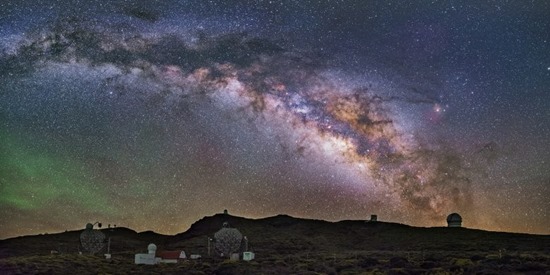
As every year, the best part of this event is the Science Lab. Participants, with support from each location’s organizers, donate computing resources to contribute to a scientific research project for the benefit of humanity. Previous editions have supported projects such as diabetes research and breast cancer cure initiatives.
This year, the global event focuses on the collaborative execution of an algorithm developed by a Spanish astrophysicist to study galaxy star formation with greater precision.
Developed by Sebastián Hidalgo, a researcher at the Institute of Astrophysics of the Canary Islands (IAC), the Global Azure Bootcamp will run:
“The Secret Life of Galaxies: Unveiling the True Nature of Their Star Formation” — the first Spanish algorithm used in this event.
Participants from all locations will connect to Microsoft Azure to contribute their talent and knowledge to the scientific project. The goal is to better understand the effects that complicate the interpretation of astronomical observations regarding star formation in galaxies. This will help researchers learn more about the formation processes and the impact of cosmological phenomena.
“The goal of the algorithm developed at the IAC and tested in the Science Lab is to reduce the impact of these effects, allowing model predictions to be compared directly with observations. It requires a very high number of tests and can only be performed in a distributed computing environment.”
— Sebastián Hidalgo
After the event, all data generated by the algorithm will be collected for analysis and processing.
More information:
Science Lab architecture in Azure
But that’s not all. Over the last three months, I’ve had the pleasure of working with Adonai Suárez (@adonaisg), Martin Abbot, and Sebastián to design and adapt the algorithm for execution during the Global Azure Bootcamp.
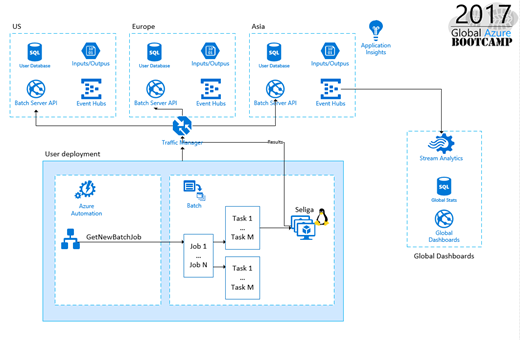
The concept is the same as previous years: each attendee deploys their own instance of the lab to collaborate in research by running the algorithm and contributing their own resources, while learning the technology used in the implementation.
In the architecture, each attendee automatically deploys the following resources via Azure Resource Manager templates:
Azure Automation Account
Includes specific modules for the lab implementation and a runbook responsible for feeding files to the algorithm. These files are served by a globally distributed API, which also tracks the processing status and collects results.
Azure Batch Account
Hosts the pool of machines that execute the algorithm (developed in Python 3). An interesting feature is that the implementation uses Ubuntu nodes — we’ll see how many penguins we deploy on April 22.
After each run, results are sent to central servers that process and store the outputs. Event Hubs notify a separate site where global progress, rankings, and status updates can be viewed.
Load testing & performance estimates
We are currently running load tests and performance validations. Here are some key figures:
-
Estimated cores deployed based on previous years: 25K–30K cores
-
More than 17 million input files prepared
-
Each file runs the algorithm 80 times
-
Total estimated executions: 1.28 billion
-
A single-core computer would take 235 years to complete the task — the goal is to finish it in one day.
Agenda
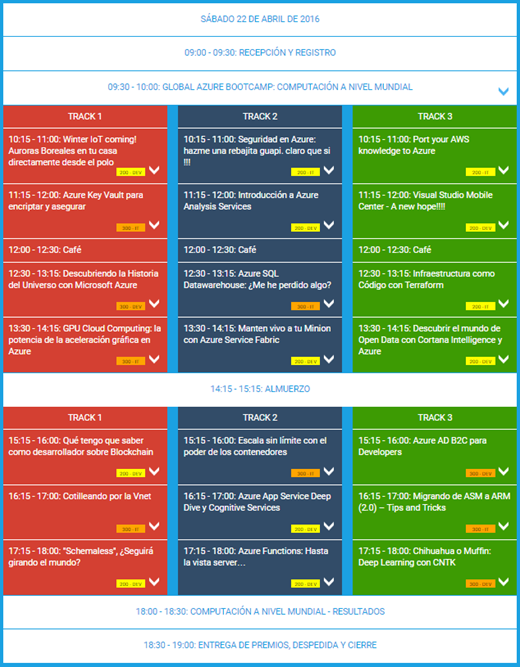
The Madrid event will feature three parallel tracks with high-level technical sessions. The selection process was so competitive that we are preparing a fourth virtual track to publish additional sessions on Channel 9 on the same day.
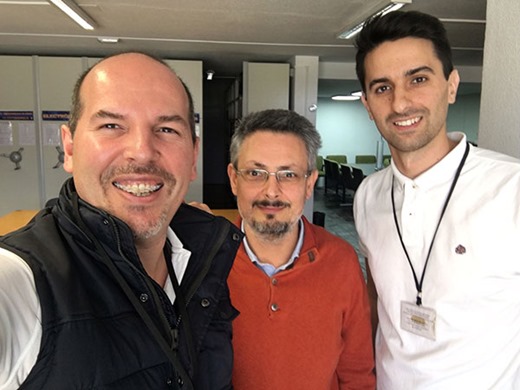
At the opening, Sebastián Hidalgo will present his algorithm live. Later, I will join Adonai Suárez and Sebastián in the session:
“Discovering the History of the Universe with Microsoft Azure”,
where we will explain the lab architecture and answer questions.
Countdown to Launch

With just two weeks until the event, all that remains is to enjoy the rest of the week — because on April 22, we will engage Warp 9 and head deep into the universe. Stay tuned for surprises…
Best regards, and Happy Coding!